Understanding Masada history on the plateau
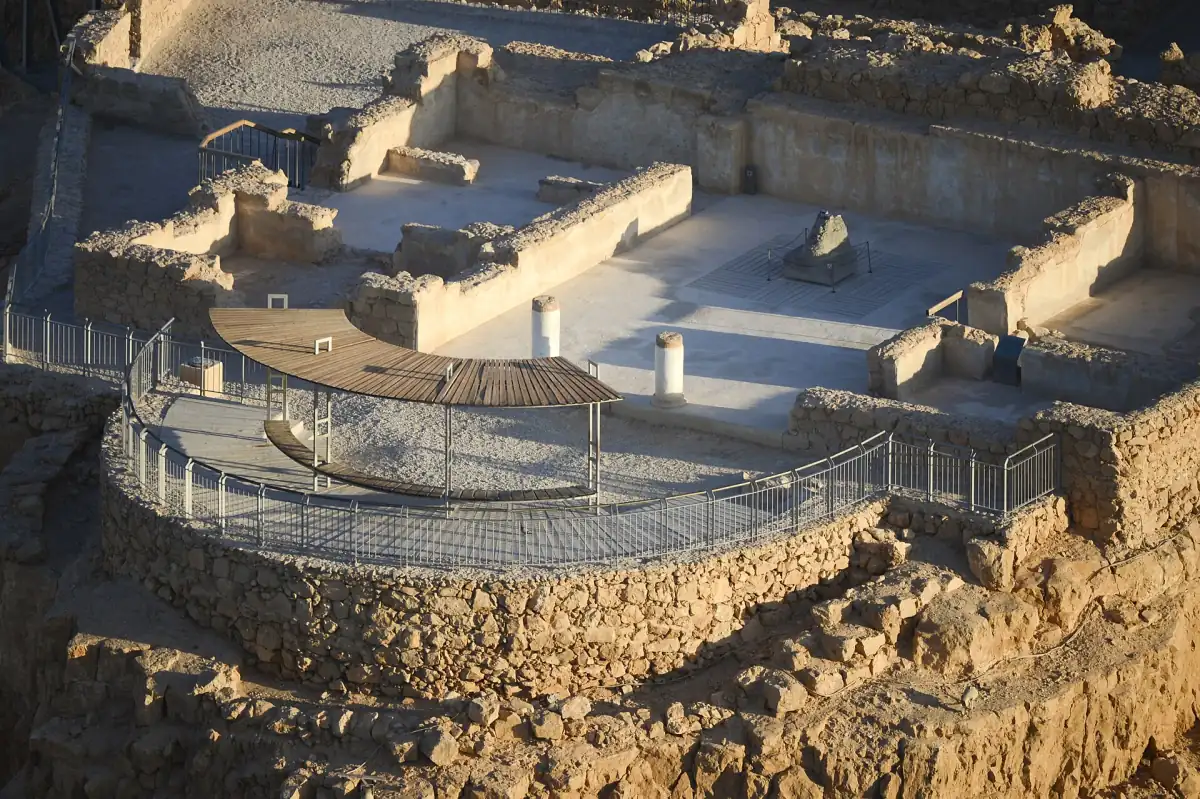
Masada history is visible in a palace fortress above the Dead Sea, with royal buildings, water storage and the remains of a Roman siege. Herod developed it as a winter palace and refuge. Later occupation and a Byzantine church add further layers to a visit that can easily become focused only on the final siege narrative.
Read the site through both its surviving buildings and its written accounts. The story of the defenders' deaths comes through Josephus and should be understood as his account. The archaeological remains provide a different way into the place: palaces, storerooms, a bathhouse, a synagogue and cisterns help organise what you see on the plateau.

Herod, the garrison and the Roman siege
Herod's reign ran from 37 to 4 BCE. His palace complex at Masada was built in an early imperial Roman style, combining a remote plateau setting with substantial royal architecture. Seeing the palaces first helps place the later siege in a landscape that already contained the buildings and infrastructure of a royal retreat.
Following the incorporation of Judaea in 6 CE, Masada held a Roman garrison. The Sicarii captured it during the revolt in 66 CE, and Eleazar Ben Yair later led the occupants. The Roman besiegers were commanded by Flavius Silva and included the Tenth Legion. The palace fortress and the surrounding siege works belong together in understanding the final conflict.
Descriptions place the siege's conclusion in 73 or 74 CE. Keep that dating open when reading a concise timeline. The important distinction for a visit is between the Herodian palace phase, the rebels' occupation and the Roman attack, rather than presenting a disputed year as a precise, settled date.
The account of collective killings and suicides is attributed to Josephus. His narrative is central to the site's later story, but its detailed numbers and speeches should be read as parts of that account. A walk through the remains is most useful when it leaves room for both the material evidence and the limits of the narrative.
Guided Masada visit
This guided trip includes transport from Tel Aviv for a visit to the fortress.
Hand-picked tours, booked through GetYourGuide. Prices are indicative starting prices in US dollars (as of November 2026). Tap a tour for live availability and the current price in your currency.

Visit the fortress with a guide
A Tel Aviv departure combines Masada, Ein Gedi and the Dead Sea with a guide and transport included. Masada and cable car charges, Ein Gedi and private beach admission are additional.
Palaces and cisterns
The Northern Palace terraces and Western Palace are central to the architectural visit. Read them alongside the storerooms and bathhouse rather than treating every wall as part of the siege. Their different functions help distinguish royal accommodation, storage and the practical workings of the complex.
The cistern system brings water storage into the same picture. On a desert plateau, it provides a useful focus beyond the dramatic edge views. A visit organised around palaces, storage and water lets you connect the surviving structures with the role of Masada as a refuge. The national park overview introduces the main visit choices, while the cable car guide covers access to the plateau.
Synagogue and Byzantine church
The synagogue and Byzantine church belong to the site's historical and architectural story. Look at them as distinct buildings within a place used at different periods. The church's mosaics add another material layer to the palaces, water infrastructure and siege landscape.
Allow your route to reflect the interests that brought you here, whether palace architecture, religious buildings or the wider sequence of occupation. When choosing a guided day trip, compare the actual itinerary rather than expecting every individual building to be a promised stop. The excursion comparison explains the broader combinations and departure cities.
Archaeology and museum
The main excavations led by Yigael Yadin took place from 1963 to 1965. The excavation museum presents finds through themes including Herod, the rebels and the Roman army. Its indoor displays complement the structures on the plateau; they are separate parts of a historical visit and need their own place in the day.
The museum offers individual audio guidance in English and German, and information describes access for visitors with reduced mobility. Advance reservation is required for a particular date and time slot. The museum visit is included with park admission according to the museum's information, while museum-only entry has its own fee.
Check the museum's time for your visit separately, particularly in summer, and fit it around the plateau and return arrangements. When travelling on an excursion, organise any museum visit around the actual tour schedule. For the approach from either side of the mountain, consult the arrival guide.
History questions
Was Masada built only for the siege?
Herod developed the palace fortress as a winter palace and refuge before the later Roman siege. The royal buildings and siege remains represent different phases.
How should I read the story of the defenders?
Attribute the account of collective killings and suicides to Josephus. Read its details as his narrative alongside the archaeological remains.
What can I focus on beyond the siege?
The palace terraces, Western Palace, storerooms, bathhouse and cisterns show the architectural complex. The synagogue and Byzantine church add further historical layers.
Can I include the museum?
Reserve its date and time slot in advance. Plan the indoor exhibition separately from your plateau route and any excursion schedule.